Biography by Laura Dassow Walls, Professor Emerita of English at the University of Notre Dame, where she taught nineteenth-century American literature, particularly the American Transcendentalists, and the history and theory of ecological thought. Best known for her award-winning biographies Henry David Thoreau: A Life, and Passage to Cosmos: Alexander von Humboldt and the Shaping of America, Dr. Walls is currently completing the literary biography, Horizon Lines: The Writing Life of Barry Lopez.
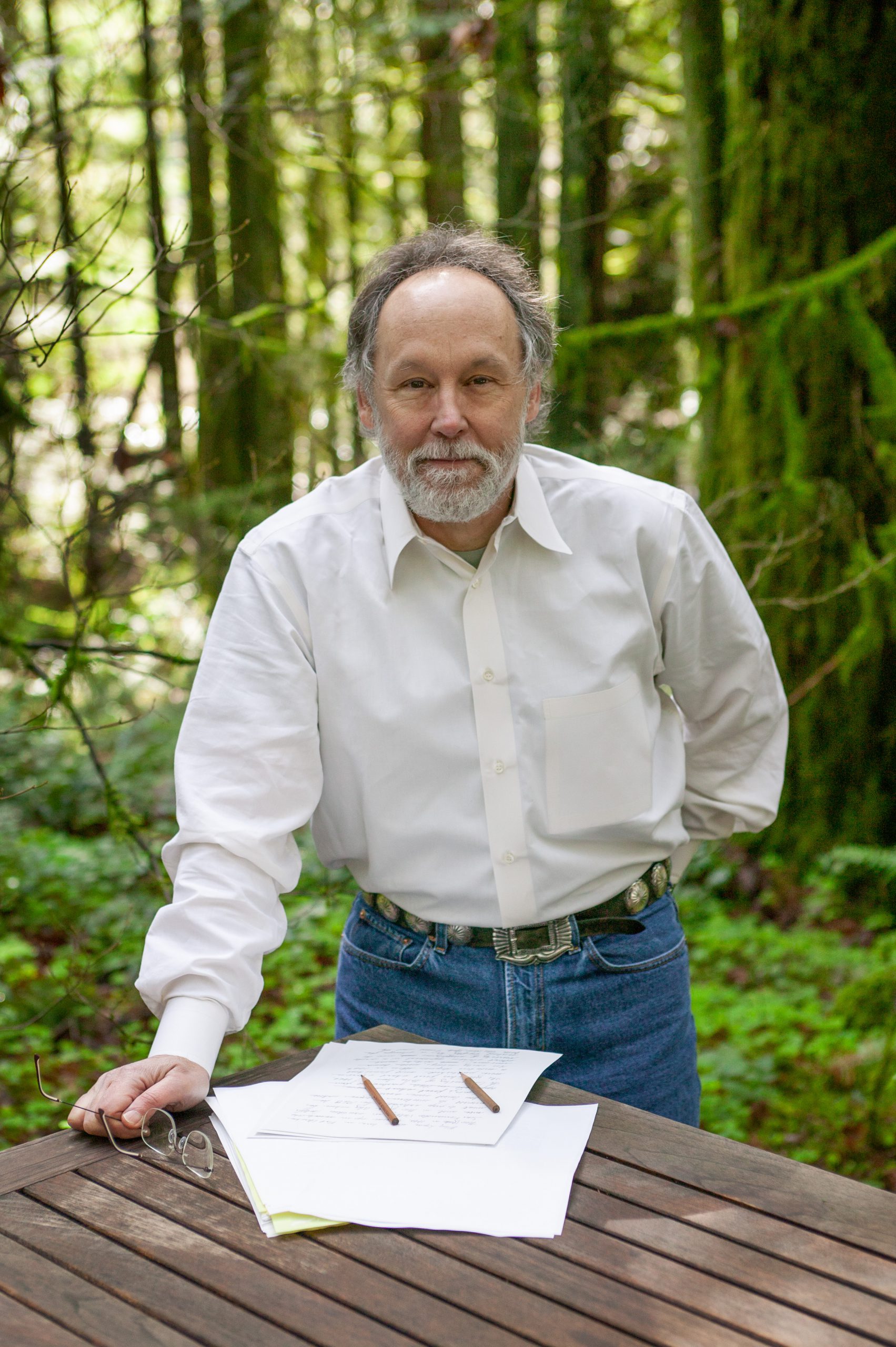
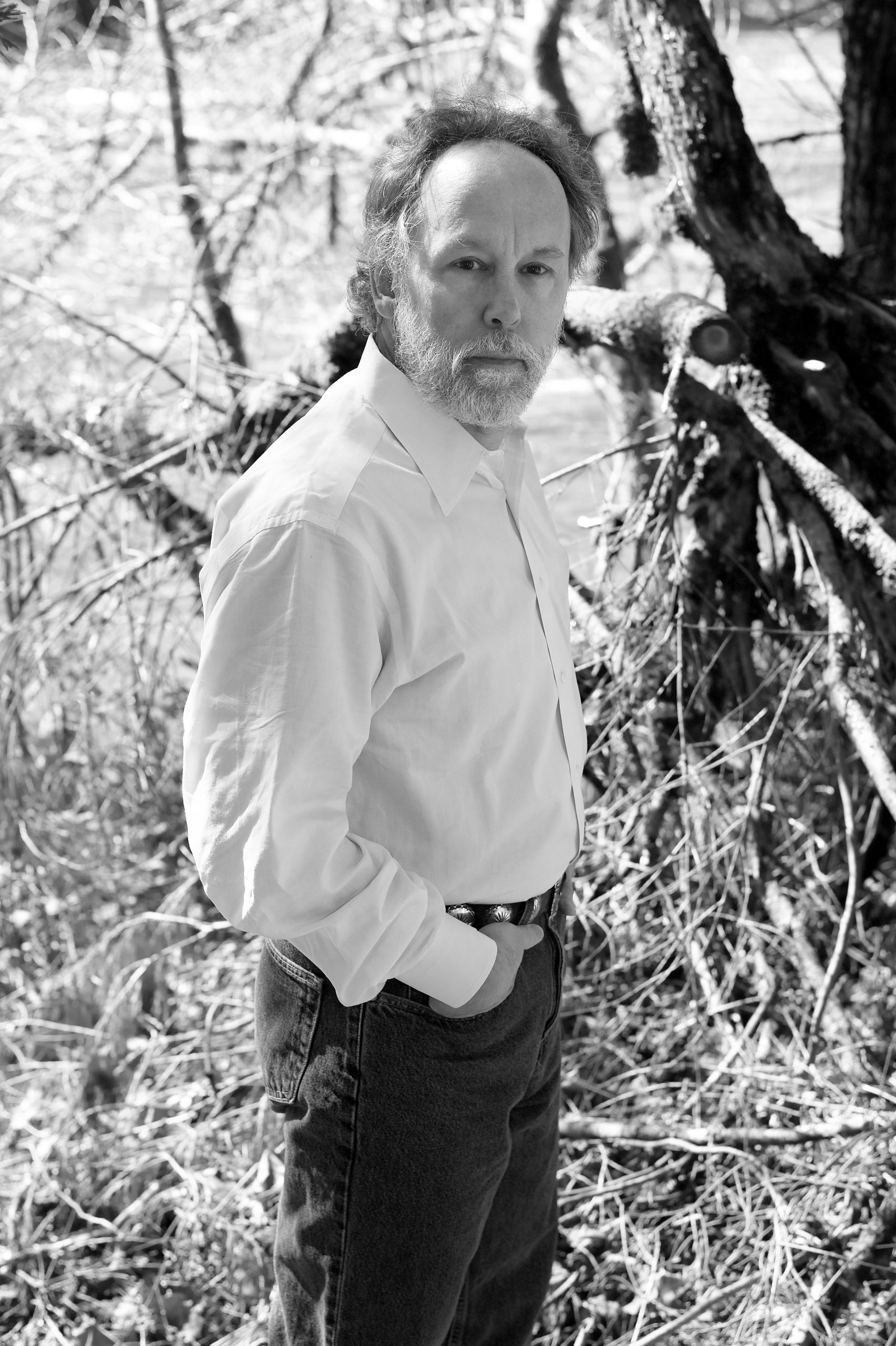
Barry Lopez, Finn Rock, Oregon, 2003 by David Liittschwager
When Barry Lopez was asked where he was from, he usually said Oregon, where he lived for fifty years deep in the western Cascades on a wooded slope by the McKenzie River. From there, Lopez traveled to the farthest reaches of the planet—the High Arctic, icebound Antarctica, the Australia desert, South Africa, war-torn Afghanistan—but he identified most closely with the landscapes of Oregon and wrote about them often. He set his first book, Desert Notes, in Oregon’s Alvord Desert, and his fourth, River Notes, along the McKenzie; he opened his last book, Horizon, from the vantage of Oregon’s Cape Foulweather.
During his earlier life, Lopez’s answer was more complicated. Barry Holstun Lopez was born on January 6, 1945, near his home in the seaport village of Mamaroneck, New York, where he would remember wading out into the Atlantic Ocean, longing to go farther. In 1948, his family moved to Los Angeles, where Barry grew up watching the rich agricultural lands of the San Fernando Valley surrender to postwar suburban sprawl. Idyllic memories of a California childhood spent roaming the outlands or visiting the Mohave Desert, Topanga Beach, or the Grand Canyon would suffuse his writings. Not until decades later could Lopez disclose the accompanying darkness, the serial abuse from ages seven to eleven, by a trusted family doctor, that he recounted in “Sliver of Sky” (2013). In 1956, after his father had abandoned the family and his mother had remarried to the New York publisher Adrian Lopez, the family moved again, this time to a Manhattan brownstone. Suddenly the barefoot California boy was exploring city sidewalks and world-renowned art museums while attending a Jesuit prep school. In 1962, Lopez entered his stepfather’s alma mater, the University of Notre Dame in South Bend, Indiana. He spent the consequential 1960s deep in the Midwest, playing baseball, acting in theater, and working as a radio announcer while earning a B.A. degree in Communication Arts and an M.A. in Teaching. Determined to be a writer, Lopez moved one last time, to attend the University of Oregon’s M.F.A. program in creative writing. He dropped out soon afterward to pursue a freelance career as a writer and photographer.
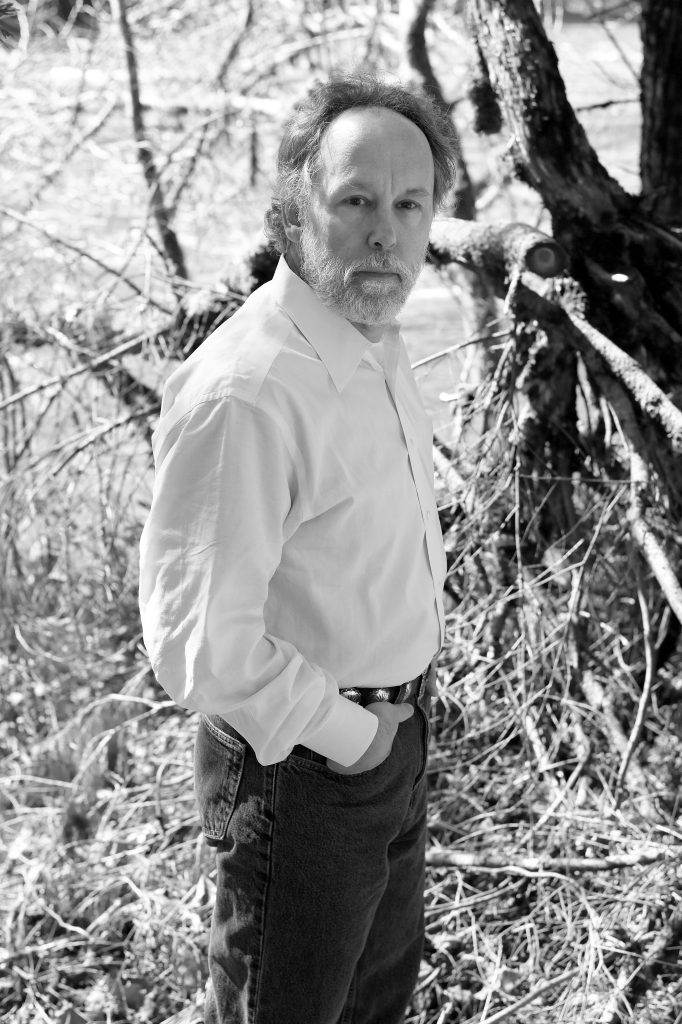
Barry Lopez, Finn Rock, Oregon, 2003 by David Liittschwager
By now Lopez had become the perpetual outsider, but in Oregon he found a home. Initially skeptical of the dawning environmental movement, in 1969 he became a whole-hearted convert, fighting to save the region’s last old-growth forests. In 1970, he and his first wife Sandra rented a small house above the McKenzie River, where they lived on the land while Barry located a publisher for his early books and began placing essays in such emerging environmental journals as Audubon and Not Man Apart. When he and Sandra heard that a litter of red wolf pups was about to be euthanized, they adopted two and raised them in their home, the inception of Lopez’s breakout book, Of Wolves and Men (1978).
Lopez’s research on wolves took him to Alaska, where, while living on the tundra studying wild wolves, he conceived the idea for Arctic Dreams (1986). His years of Arctic travel and his new book’s phenomenal success inspired Lopez with a bold vision: an even bigger book, a series of epic meditations on the history, evolution, and future of humanity that would range across the world’s most remote and challenging landscapes. In 1988, his proposal, Horizon, earned Lopez a Guggenheim Fellowship, and in 1989 a lucrative publishing contract, which he used to purchase the 32 acres of old-growth forest surrounding his home. Today this land remains the largest uncut patch of timber in the McKenzie Valley.
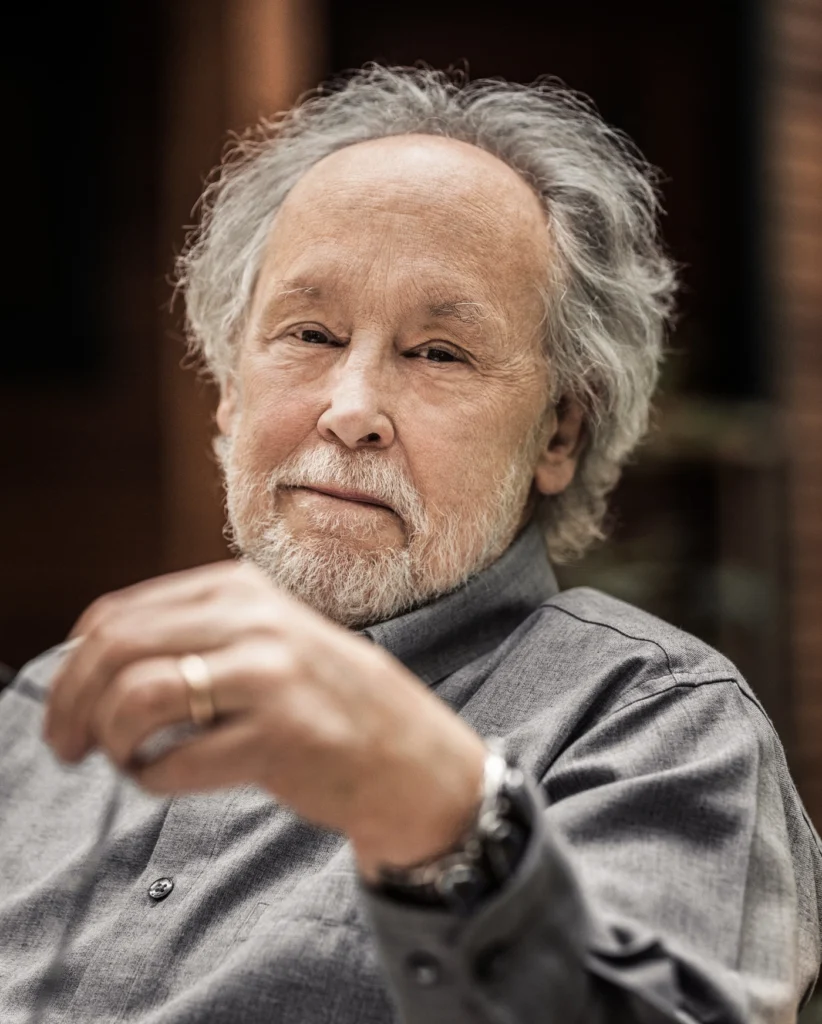
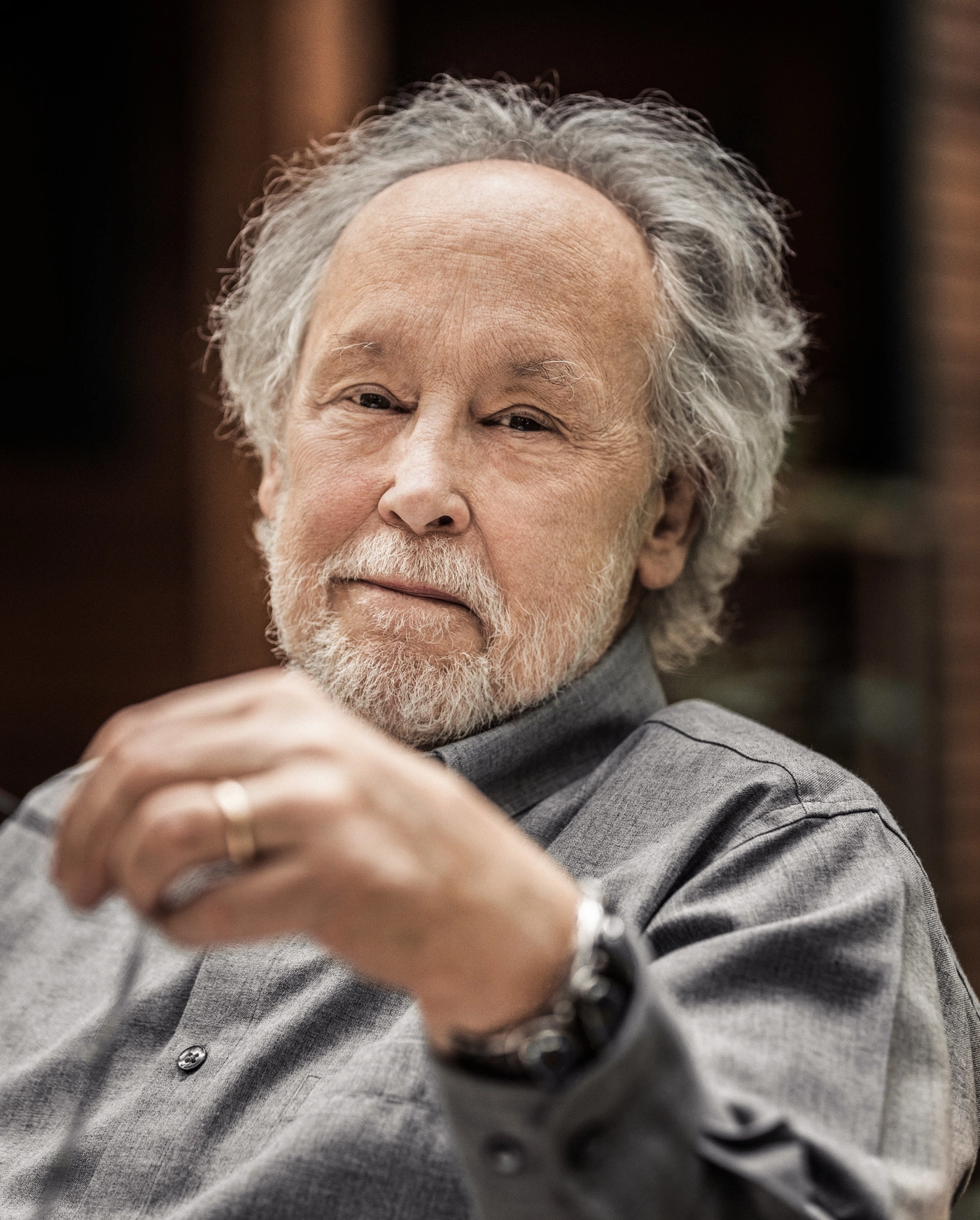
Barry Lopez, Finn Rock, Oregon, 2018 by John Clark
What followed were three decades of intensive travel to over eighty countries alongside a proliferating career as a writer, lecturer, teacher, editor, conservationist, and public intellectual. In his travels, Lopez preferred to work with natural scientists as a member of their field teams, allowing his writings to be informed by scientific and philosophical inquiry as well as the history and culture of Indigenous peoples, an early interest that deepened with age and his many friendships with Indigenous elders. He wrote several more works of fiction, co-edited Home Ground (2006) with his second wife, Debra Gwartney, and contributed regularly to Harper’s, Granta, The Georgia Review, Orion, Outside, The Paris Review, Mānoa, and other publications in the United States and abroad.
Although Lopez gave up photography in 1981, believing it distracted him from his work as a writer, he maintained a lifelong kinship with an extended community of artists, including photographers, painters, sculptors, and composers. Lopez’s upbringing in the Catholic Church was reflected in his early determination to become a monk, and he never ceased his spiritual quest for a better, wiser, and more holy way of life. Starting in the 1990s, he led several spiritual retreats at the Mount Calvary Monastery in Santa Barbara, until it burned in the wildfires of 2008. In 2001, he began working with Texas Tech University on an innovative new curriculum combining science and the humanities, and helped found the James E. Sowell Family Collection in Literature, Community, and the Natural World, seeding it with his own professional archives. In 2003, Lopez was appointed Texas Tech’s first visiting distinguished scholar, a position he held until his death.
While regarded today as one of the most insightful and influential writers on the natural world, Barry Lopez’s subjects always reflected his concomitant concern for human life, which was mirrored by the community of writers he helped draw together and nurture. Lopez wrote with uncanny clarity, accuracy, and beauty about animals and the landscapes in which they live, and about our lust for power and wealth alongside our capacity for empathy and love. His body of work, both fiction and nonfiction, is distinguished by a profound ethical and spiritual yearning to better understand who we are and how best to live on Earth, by enacting our deepest values through our lived commitments.
On the night of September 7, 2020, a wildfire erupted on the upper McKenzie River near the home that Lopez shared with Debra Gwartney. Driven by hot, high winds and exacerbated by climate change, the fire burned 173,000 acres of mixed conifer forest and destroyed hundreds of homes and properties. While their house and guest cottage were spared, the outbuilding where Lopez stored his remaining archives was lost. Forcibly removed to Eugene, Barry Lopez passed away on Christmas Day 2020, a climate refugee still awaiting a return home. Today he is home at last, resting amidst the reforested landscape to which he dedicated his life.
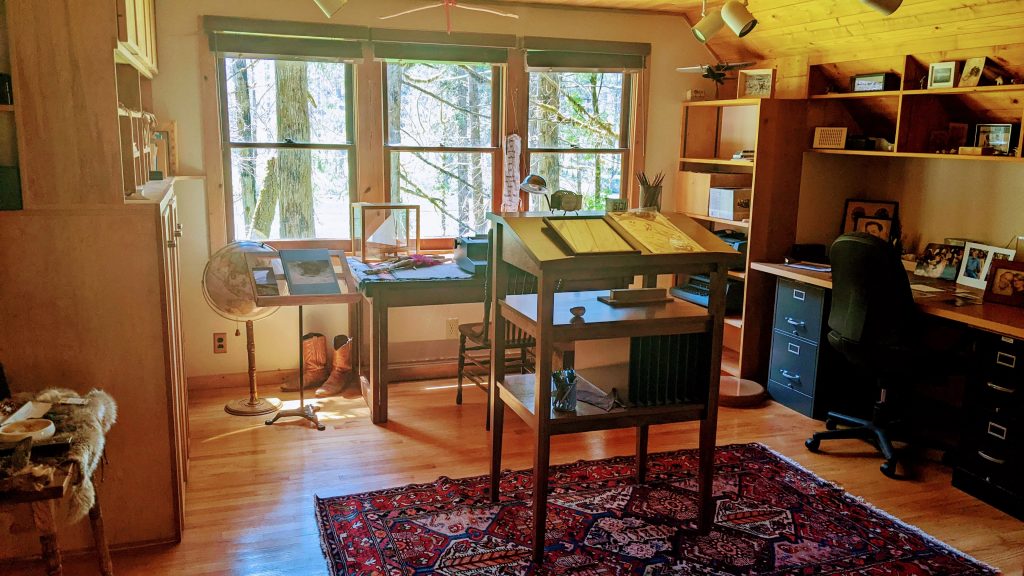
Barry Lopez’s Studio, Finn Rock, Oregon
For an account of Barry Lopez’s childhood in Los Angeles’s San Fernando Valley, see A Scary Abundance of Water.
Readers may also wish to see the essays, “Missing California,” “Madre de Dios,” and “Sliver of Sky” in Embrace Fearlessly the Burning World (Random House, 2022) as well as the biographical essays collected in About This Life (Alfred A. Knopf, 1998).